

Can a flange ball bearing be used in a high - pressure environment?
Nov 11, 2025
Can a flange ball bearing be used in a high - pressure environment?
As a supplier of flange ball bearings, I often encounter inquiries from customers regarding the suitability of our products in high - pressure environments. This is a crucial question, as the performance and reliability of bearings under high pressure can significantly impact the overall operation of various industrial machinery.
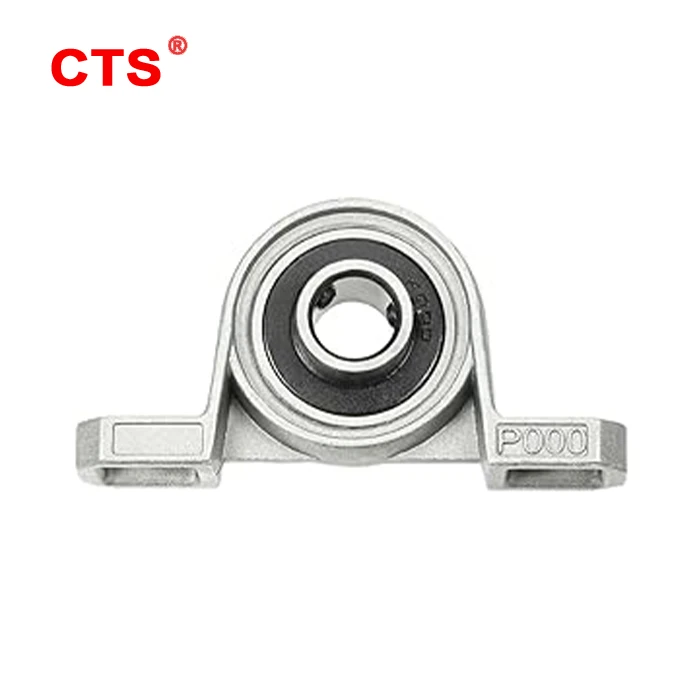
Flange ball bearings are a type of mounted bearing that combines a ball bearing with a flanged housing. The flange provides a convenient way to mount the bearing to a surface, and the ball bearing allows for smooth rotation with relatively low friction. These bearings are commonly used in applications such as conveyor systems, agricultural equipment, and light - to medium - duty industrial machinery.

Understanding High - Pressure Environments
Before delving into whether flange ball bearings can be used in high - pressure environments, it's essential to understand what constitutes a high - pressure environment. In industrial settings, high pressure can refer to hydraulic pressure, pneumatic pressure, or mechanical pressure. For example, in hydraulic systems, pressures can range from a few hundred to several thousand pounds per square inch (psi). In mechanical applications, high pressure might be exerted by heavy loads or high - speed forces.
Factors Affecting the Use of Flange Ball Bearings in High - Pressure Environments
1. Bearing Design and Construction
The design and construction of a flange ball bearing play a vital role in its ability to withstand high pressure. High - quality bearings are typically made from materials with high strength and hardness, such as chrome steel or stainless steel. The internal geometry of the bearing, including the size and shape of the balls and the raceways, also affects its load - carrying capacity. A well - designed bearing with proper clearances and a robust cage can better distribute the load and resist deformation under high pressure.
2. Lubrication
Lubrication is another critical factor. In high - pressure environments, the lubricant must be able to maintain a sufficient film thickness between the moving parts of the bearing to reduce friction and wear. Special high - pressure lubricants are available that are formulated to withstand extreme pressures and temperatures. These lubricants often contain additives that enhance their anti - wear and anti - corrosion properties.
3. Housing Material and Design
The housing of the flange ball bearing also needs to be able to withstand high pressure. Ductile iron is a common material for bearing housings due to its high strength and good ductility. It can absorb shock and vibration, which are often associated with high - pressure applications. You can find more information about Ductile Iron Housing And Units. Additionally, the design of the housing should provide adequate support for the bearing and prevent any misalignment that could lead to premature failure.
4. Sealing
Effective sealing is essential in high - pressure environments to prevent contaminants from entering the bearing and to retain the lubricant. High - quality seals can withstand the pressure differentials and prevent leakage. Seals can be made from various materials, such as rubber or synthetic polymers, and are designed to fit tightly around the bearing.
Case Studies: Flange Ball Bearings in High - Pressure Applications
In some industrial applications, flange ball bearings have been successfully used in high - pressure environments. For example, in certain types of hydraulic presses, where high mechanical pressure is applied, flange ball bearings with appropriate design and lubrication have been able to operate reliably. However, it's important to note that these applications often require careful selection and customization of the bearings.
In a conveyor system that operates under high - speed and heavy - load conditions, which can create high mechanical pressure, the use of flange ball bearings with a zinc alloy housing has shown good results. The Zinc Alloy Bearing Units KP000 offer a combination of strength and corrosion resistance, making them suitable for such demanding environments.
Limitations and Challenges
Despite their potential use in high - pressure environments, flange ball bearings do have some limitations. One of the main challenges is the risk of fatigue failure under prolonged high - pressure conditions. The repeated loading and unloading of the bearing can cause cracks to form in the raceways or the balls, eventually leading to bearing failure.
Another limitation is the sensitivity to misalignment. In high - pressure applications, even a slight misalignment can cause uneven loading on the bearing, which can accelerate wear and reduce its service life. Therefore, proper installation and alignment procedures are crucial.
Conclusion
In conclusion, a flange ball bearing can be used in a high - pressure environment, but it requires careful consideration of several factors. The bearing design, lubrication, housing material, and sealing all play important roles in determining its suitability. With the right selection and proper maintenance, flange ball bearings can provide reliable performance in high - pressure applications.
If you are looking for flange ball bearings for high - pressure environments or have any questions about our products, we are here to assist you. Our team of experts can help you choose the most appropriate bearing for your specific application and provide you with technical support. We also offer a wide range of related products, such as Take Up Bearing Unit, which can be used in conjunction with flange ball bearings to enhance the performance of your machinery. Contact us today to start a procurement discussion and find the best solution for your needs.
References
- "Bearing Handbook" by SKF
- "Mechanical Design and Manufacturing" textbooks
- Industry standards and guidelines related to bearing applications in high - pressure environments