

How to check the quality of insert bearings?
May 28, 2025
When it comes to the industrial world, insert bearings play a crucial role in ensuring the smooth operation of various machinery. As a reliable insert bearings supplier, I understand the significance of providing high - quality products to our customers. In this blog, I'll share some essential methods on how to check the quality of insert bearings.
1. Visual Inspection
The first step in checking insert bearings is a visual inspection. This is a basic yet important process that can reveal a lot about the bearing's quality.
Surface Finish
Examine the outer surface of the insert bearing. A high - quality bearing should have a smooth and uniform surface finish. Any signs of roughness, scratches, or pitting can indicate poor manufacturing processes or potential damage during handling. For example, if there are deep scratches on the outer ring of an HC200 Series Insert Bearing, it may lead to uneven load distribution and premature failure of the bearing.
Corrosion
Look for any signs of corrosion on the bearing. Corrosion can occur due to improper storage or exposure to harsh environments. Even a small amount of rust can cause the bearing to malfunction over time. A well - protected and high - quality insert bearing should be free from any visible corrosion. For instance, in a marine environment, a UK Bearing that shows signs of rust will not be able to perform its intended function effectively, and it may need to be replaced sooner than expected.
Sealing Integrity
Check the seals of the insert bearing. The seals are designed to prevent contaminants from entering the bearing and to retain the lubricant. If the seals are damaged, torn, or not properly installed, it can allow dirt, dust, and moisture to enter the bearing, which can lead to increased wear and reduced lifespan. In the case of an Insert Ball Bearing - SB200 Series, a faulty seal can quickly compromise the performance of the bearing.
2. Dimensional Accuracy
Accurate dimensions are critical for the proper functioning of insert bearings. Any deviation from the specified dimensions can lead to problems such as misalignment, excessive noise, and premature wear.

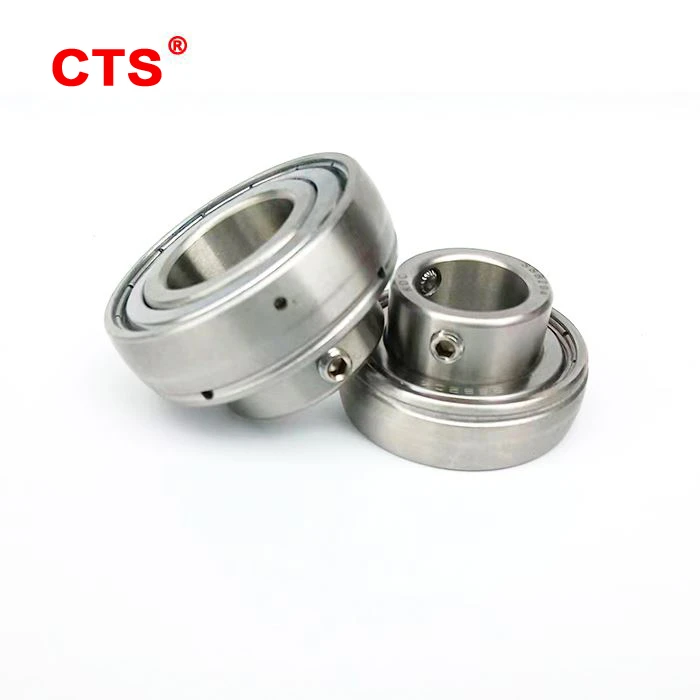
Outer Diameter and Inner Diameter
Measure the outer diameter and inner diameter of the bearing using precision measuring tools such as calipers or micrometers. Compare the measured values with the manufacturer's specifications. A slight deviation in the diameter can cause issues with the fit of the bearing in the housing or on the shaft. For example, if the inner diameter of a UK Bearing is larger than the specified value, it may result in a loose fit on the shaft, leading to vibrations and potential damage to the bearing.
Width
The width of the insert bearing also needs to be checked. Incorrect width can affect the alignment of the bearing within the housing and may cause uneven loading. Make sure the width of the bearing meets the design requirements. For instance, in a conveyor system, an insert bearing with an incorrect width may not be able to support the load properly, leading to premature failure.
3. Rotational Performance
The rotational performance of an insert bearing is a key indicator of its quality.
Smooth Rotation
Manually rotate the bearing to check for smoothness. A high - quality bearing should rotate freely without any jerks, roughness, or abnormal noises. If you feel any resistance or hear grinding noises during rotation, it may indicate internal damage, such as worn - out balls or races. For example, if an HC200 Series Insert Bearing does not rotate smoothly, it could be due to a lack of lubrication or the presence of contaminants inside the bearing.
Axial and Radial Clearance
Check the axial and radial clearance of the bearing. The clearance is the amount of movement allowed between the inner and outer rings of the bearing. Excessive clearance can lead to vibrations and noise, while insufficient clearance can cause overheating and premature wear. Use appropriate measuring tools to determine the clearance and compare it with the recommended values. In the case of an Insert Ball Bearing - SB200 Series, incorrect clearance can significantly affect its performance and lifespan.
4. Material Quality
The quality of the materials used in the manufacturing of insert bearings has a direct impact on their performance and durability.
Bearing Steel
Most insert bearings are made of high - quality bearing steel. The steel should have the right hardness, toughness, and corrosion resistance. High - quality bearing steel can withstand high loads and repeated stress without deforming or cracking. You can request material certificates from the supplier to verify the quality of the steel used in the bearing. For example, a UK Bearing made from inferior steel may not be able to handle heavy loads, leading to premature failure.
Cage Material
The cage in the bearing is used to separate the rolling elements and keep them evenly spaced. The cage material should be strong, lightweight, and have good wear resistance. Common cage materials include steel, brass, and plastic. Check the quality of the cage for any signs of damage or poor workmanship. A damaged cage can cause the rolling elements to misalign, leading to increased wear and reduced bearing performance.
5. Lubrication
Proper lubrication is essential for the smooth operation and long - term performance of insert bearings.
Lubricant Type
Check the type of lubricant used in the bearing. Different applications require different types of lubricants, such as grease or oil. The lubricant should be compatible with the bearing materials and the operating environment. For example, in high - temperature applications, a special high - temperature grease may be required for an HC200 Series Insert Bearing.
Lubricant Quantity
Ensure that the bearing has the right amount of lubricant. Too little lubricant can cause increased friction and wear, while too much lubricant can lead to overheating and leakage. The manufacturer usually provides guidelines on the appropriate lubricant quantity for each bearing model.
6. Noise and Vibration Testing
In a more advanced quality check, noise and vibration testing can be carried out.
Noise
Use a noise - measuring device to detect any abnormal noises during the rotation of the bearing. Excessive noise can be a sign of internal damage, misalignment, or improper lubrication. A quiet - running bearing is generally an indication of good quality. For example, in a precision machine tool, an insert bearing that produces excessive noise can affect the accuracy of the machining process.
Vibration
Vibration analysis can help identify any unbalanced or damaged components in the bearing. By measuring the vibration levels and frequencies, potential problems can be detected early. High - frequency vibrations may indicate issues such as worn - out rolling elements, while low - frequency vibrations may be caused by misalignment or loose fittings.
As a professional insert bearings supplier, we are committed to providing our customers with high - quality products. By following these methods to check the quality of insert bearings, you can ensure that you are getting the best - performing bearings for your applications. If you are interested in purchasing insert bearings or have any questions about our products, we welcome you to contact us for a detailed discussion and procurement negotiation.
References
- "Bearing Handbook" - A comprehensive guide on bearing technology and quality control.
- Industry standards and specifications related to insert bearings.