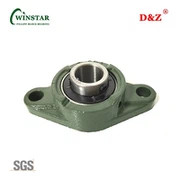

What Are The Replacement Intervals For Sb Bearing?
Oct 20, 2026
Understanding Sb Bearings
Sb Bearings, also known as self - aligning ball bearings, are designed to accommodate misalignment between the shaft and the housing. They are widely used in various industrial applications, such as conveyor systems, agricultural machinery, and mining equipment. These bearings consist of an inner ring, an outer ring, balls, and a cage. The self - aligning feature allows the bearing to function properly even when there is some degree of misalignment, which is beneficial in many real - world operating conditions.
Factors Affecting Replacement Intervals
Load
One of the most significant factors affecting the replacement interval of Sb Bearings is the load they are subjected to. Heavy loads can cause increased stress on the bearing components, leading to accelerated wear and fatigue. For example, in a mining application where the bearing is supporting large - scale equipment and heavy materials, the load on the Sb Bearing is much higher compared to a light - duty conveyor system. As a general rule, bearings under higher loads will need to be replaced more frequently.
Speed
The rotational speed of the shaft also impacts the bearing's lifespan. High - speed operation generates more heat and friction within the bearing, which can lead to premature wear. If a bearing is operating at a very high speed, the lubricant may break down more quickly, and the balls and races may experience greater wear. In contrast, a bearing operating at a lower speed will generally have a longer service life.
Operating Environment
The environment in which the bearing operates is another critical factor. Harsh environments, such as those with high levels of dust, moisture, or corrosive substances, can cause damage to the bearing. For instance, in a chemical plant, the presence of corrosive chemicals can corrode the bearing surfaces, reducing its performance and lifespan. Similarly, in a dusty environment like a quarry, dust particles can enter the bearing and cause abrasion. In such cases, the replacement interval may need to be shortened.
Lubrication
Proper lubrication is essential for the smooth operation and longevity of Sb Bearings. Insufficient or improper lubrication can lead to increased friction, heat generation, and wear. Over - lubrication can also be a problem, as it can cause the bearing to overheat and attract contaminants. The type of lubricant used, as well as the frequency of lubrication, can significantly affect the replacement interval.


General Replacement Interval Guidelines
While it is difficult to provide a one - size - fits - all replacement interval for Sb Bearings, here are some general guidelines based on different operating conditions:
Light - Duty Applications
In light - duty applications, such as small conveyor systems or office equipment, where the load is relatively low and the operating speed is moderate, the Sb Bearings may last for several years. A typical replacement interval could be anywhere from 3 to 5 years, depending on the specific operating conditions.
Medium - Duty Applications
For medium - duty applications, like some industrial machinery with moderate loads and speeds, the replacement interval may be around 1 to 3 years. These applications may include certain types of manufacturing equipment or agricultural machinery.
Heavy - Duty Applications
In heavy - duty applications, such as mining, construction, or large - scale industrial equipment, the Sb Bearings are subjected to high loads and often operate in harsh environments. In such cases, the replacement interval may be as short as 6 months to 1 year.
Our Product Offerings
As a supplier of Sb Bearings, we offer a wide range of high - quality products to meet the diverse needs of our customers. We have Ball Bearings with Set screw, which are designed for easy installation and secure shaft connection. Our UCX Series Insert Bearing provides excellent self - aligning capabilities and is suitable for various industrial applications. Additionally, our Triple - sealed Bearings offer enhanced protection against contaminants, extending the bearing's service life.
Importance of Regular Inspection
Regardless of the general replacement intervals, regular inspection of Sb Bearings is crucial. By conducting routine inspections, you can detect early signs of wear, damage, or other issues. This allows you to take proactive measures, such as lubrication, adjustment, or replacement, before a major failure occurs. Some signs of bearing problems include abnormal noise, vibration, increased temperature, and reduced performance.
Contact Us for Purchase and Consultation
If you are in the market for Sb Bearings or need more information about replacement intervals and our product offerings, we invite you to contact us. Our team of experts is ready to assist you in selecting the right bearings for your specific application and providing guidance on maintenance and replacement. Whether you are a small - scale business or a large - scale industrial enterprise, we can offer customized solutions to meet your needs.
FAQ
Q: How often should Sb Bearings be replaced?
A: The replacement interval varies depending on the application. Generally, Sb Bearings may last 3–5 years in light-duty applications, 1–3 years in medium-duty applications, and 6 months to 1 year in heavy-duty applications. Regular inspections are essential to determine the actual replacement needs.
Q: How can I extend the service life of Sb Bearings?
A: To extend the service life of Sb Bearings, ensure proper lubrication, avoid excessive loads and speeds, protect bearings from dust and moisture, and conduct regular inspections. Choosing suitable bearings, such as triple-sealed bearings, can also improve protection against contaminants and extend service life.