

What is the hardness of UCP217 bearings?
Dec 09, 2025
Hey there! As a supplier of UCP217 bearings, I get asked a lot about the hardness of these little wonders. So, let's dive right in and break it down.
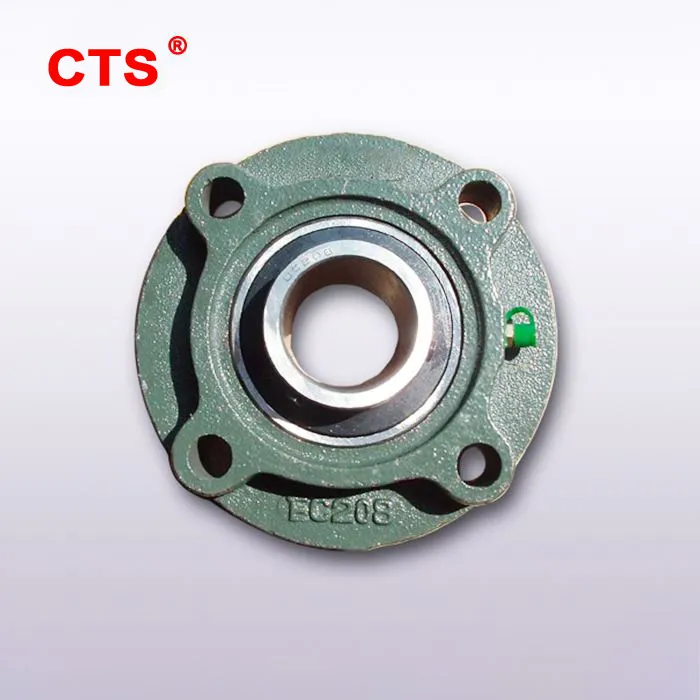
First off, what exactly are UCP217 bearings? They're a type of mounted bearing unit. Mounted bearings are used in a wide range of applications, from industrial machinery to agricultural equipment. The UCP217, in particular, is designed to handle radial loads and some axial loads, making it pretty versatile.
Now, let's talk about hardness. Hardness is a measure of how resistant a material is to deformation, indentation, or scratching. In the case of UCP217 bearings, hardness is crucial because it directly affects the bearing's performance and lifespan.
The outer ring and inner ring of UCP217 bearings are typically made of high - quality bearing steel. This steel is heat - treated to achieve the right level of hardness. Usually, the hardness of the bearing rings is in the range of 58 - 62 HRC (Rockwell hardness scale). This hardness range is carefully selected to balance between wear resistance and toughness.

Why is this specific hardness range so important? Well, if the hardness is too low, the bearing will wear out quickly. Imagine a race car tire with a soft rubber compound. It might grip well at first, but it'll wear down fast, and you'll have to replace it often. The same goes for bearings. A low - hardness bearing will be more prone to surface damage, such as pitting and scoring, which can lead to premature failure.
On the other hand, if the hardness is too high, the bearing becomes brittle. It's like trying to make a sword out of glass. Sure, glass is hard, but it'll shatter easily. A brittle bearing is more likely to crack under stress, especially when it's subjected to shock loads or vibrations. So, that 58 - 62 HRC range is like the sweet spot for UCP217 bearings.
The rolling elements, like the balls or rollers in the bearing, also have a specific hardness. They're usually even harder than the bearing rings, often around 60 - 64 HRC. This extra hardness helps them withstand the high contact stresses as they roll between the inner and outer rings.
The hardness of the housing of UCP217 bearings can vary depending on the material. Some housings are made of cast iron, while others are made of ductile iron. If you're interested in ductile iron housing and units, you can check out Ductile Iron Housing And Units. Ductile iron has a good combination of strength and ductility, and its hardness is typically in the range of 170 - 240 HB (Brinell hardness scale).
Another type of housing is the four - bolt flange cartridge unit. You can learn more about them at Four Bolt Flange Cartridge Units. These units are designed for easy installation and replacement, and the housing hardness is also optimized for the specific application.
Tapped - base pillow blocks are yet another option. You can find more details about them at Tapped-base Pillow Blocks. The hardness of the tapped - base pillow block housing is engineered to provide a stable support for the bearing while also being resistant to wear and corrosion.
When it comes to manufacturing UCP217 bearings, the heat - treatment process is key to achieving the right hardness. The steel parts are heated to a specific temperature and then cooled at a controlled rate. This process changes the microstructure of the steel, which in turn affects its hardness. Quality control is also essential. We use advanced testing methods, like hardness testing machines, to ensure that every bearing meets the required hardness standards.
In real - world applications, the hardness of UCP217 bearings plays a big role. For example, in conveyor systems, the bearings need to handle continuous loads and constant movement. The high hardness of the bearing rings and rolling elements ensures that they can withstand the wear and tear over a long period. In agricultural equipment, where the bearings may be exposed to dirt, dust, and moisture, the right hardness helps prevent corrosion and surface damage.
If you're in the market for UCP217 bearings, it's important to understand the hardness and its implications. A bearing with the right hardness will last longer, perform better, and save you money in the long run. Whether you're an engineer designing a new machine or a maintenance technician looking to replace worn - out bearings, choosing the right UCP217 bearing with the appropriate hardness is crucial.
So, if you're interested in purchasing UCP217 bearings or have any questions about their hardness or other properties, feel free to reach out. We're here to help you make the best choice for your specific application.
References
- "Bearing Handbook" by SKF
- "Mechanical Design and Manufacturing" textbooks on bearing materials and properties