
How Do Thermoplastic Bearings Respond To Temperature Changes?
Nov 20, 2026
Thermoplastic bearings have become a popular choice in various industries due to their unique properties, including corrosion resistance, low friction, and self - lubrication. One of the critical aspects that users often need to understand is how these bearings respond to temperature changes. As a thermoplastic bearing supplier, I have witnessed firsthand the significance of this topic for our customers.
Basic Properties of Thermoplastic Bearings
Thermoplastics are a class of polymers that can be melted and re - shaped multiple times upon heating. This characteristic makes them ideal for manufacturing bearings with complex geometries. Common thermoplastics used in bearing production include nylon, acetal, and PTFE (polytetrafluoroethylene).
These materials have inherent properties that give thermoplastic bearings an edge over traditional metal bearings. For example, they are lightweight, which reduces the overall weight of the machinery in which they are installed. They also have excellent chemical resistance, making them suitable for use in harsh environments where metal bearings would corrode.
Response to Temperature Changes
Thermal Expansion
One of the most significant ways thermoplastic bearings respond to temperature changes is through thermal expansion. Like all materials, thermoplastics expand when heated and contract when cooled. The coefficient of thermal expansion (CTE) is a measure of how much a material expands or contracts per unit length per degree change in temperature.
Thermoplastic bearings typically have a higher CTE compared to metal bearings. For instance, nylon has a CTE in the range of 80 - 110 x 10⁻⁶ /°C, while steel has a CTE of around 12 x 10⁻⁶ /°C. This means that a thermoplastic bearing will expand more than a steel bearing when exposed to the same temperature increase.
The implications of this are two - fold. On one hand, in applications where the bearing is operating in a relatively stable temperature environment, the thermal expansion can be accounted for during the design phase. For example, if a thermoplastic bearing is used in a machine that operates at a constant elevated temperature, the bearing can be designed with a slightly smaller initial size to allow for expansion.
On the other hand, in applications where the temperature fluctuates significantly, the large thermal expansion of thermoplastic bearings can pose challenges. If the bearing expands too much, it can cause interference with other components in the system, leading to increased friction, wear, and potentially even failure of the bearing or the entire machine.
Change in Mechanical Properties
Temperature changes also affect the mechanical properties of thermoplastic bearings. As the temperature increases, the stiffness of thermoplastics generally decreases. This means that the bearing becomes more flexible and less able to withstand high loads.
For example, at low temperatures, a thermoplastic bearing may have a high modulus of elasticity, which allows it to support heavy loads without significant deformation. However, as the temperature rises, the modulus of elasticity decreases, and the bearing may start to deform under the same load. This can lead to increased play in the bearing, reduced accuracy, and premature wear.
Conversely, at very low temperatures, thermoplastics can become brittle. This is because the molecular chains in the polymer become less mobile, and the material loses its ability to absorb energy through deformation. As a result, the bearing may be more prone to cracking or breaking under impact or high - stress conditions.
Lubrication and Friction
The lubrication properties of thermoplastic bearings are also affected by temperature changes. Many thermoplastics have self - lubricating properties, which are due to the presence of low - friction additives or the inherent low surface energy of the polymer.
At elevated temperatures, the self - lubricating properties of thermoplastics can change. The additives may break down or migrate to the surface, altering the friction coefficient. In some cases, the friction coefficient may increase, leading to higher energy consumption and more wear on the bearing and the mating surfaces.
On the other hand, at low temperatures, the mobility of the polymer chains is reduced, which can also affect the self - lubricating properties. The bearing may experience increased friction, and the smooth operation of the machinery may be compromised.


Applications and Considerations
Industrial Applications
In industrial applications, such as conveyor systems, packaging machinery, and food processing equipment, thermoplastic bearings are often used due to their corrosion resistance and low maintenance requirements. However, the temperature conditions in these applications can vary widely.
For example, in a food processing plant, the temperature may range from near - freezing during the refrigeration process to relatively high temperatures during the cooking or sterilization steps. In such cases, it is crucial to select the appropriate thermoplastic material and design the bearing to accommodate the temperature variations.
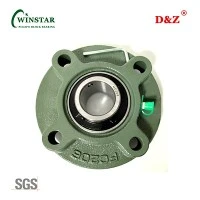
Our Square Flanged Thermoplastic Housings and Units are designed to provide reliable performance in a wide range of temperature conditions. These units are made from high - quality thermoplastics that have been engineered to minimize the effects of thermal expansion and maintain their mechanical properties over a broad temperature range.
Automotive Applications
In the automotive industry, thermoplastic bearings are used in various components, such as door hinges, seat mechanisms, and engine accessories. The temperature under the hood of a car can reach very high levels, especially during long - distance driving or in hot climates.
Thermoplastic bearings used in these applications need to be able to withstand high temperatures without significant degradation. Our Custom Plastic Bearings can be tailored to meet the specific temperature requirements of automotive applications. We can select the appropriate thermoplastic material and add reinforcements or additives to enhance the bearing's performance at high temperatures.
Medical Applications
In medical devices, thermoplastic bearings are used in equipment such as surgical instruments, diagnostic devices, and patient - handling equipment. The temperature requirements in medical applications are often strict, as the devices need to operate reliably in both room - temperature and body - temperature conditions.
Our Thermoplastic Oval Flange Housing Units are suitable for medical applications, as they can be designed to maintain their dimensional stability and mechanical properties within the required temperature range.
Mitigating the Effects of Temperature Changes
Material Selection
Choosing the right thermoplastic material is crucial. Different thermoplastics have different temperature - dependent properties. For example, PTFE has a relatively low coefficient of friction and good thermal stability, making it suitable for high - temperature applications. Nylon, on the other hand, is more flexible and has good impact resistance, but its mechanical properties are more sensitive to temperature changes.
Design Optimization
The design of the bearing can also play a significant role in reducing the impact of temperature changes. For example, incorporating expansion gaps or using a split - design bearing can allow for thermal expansion without causing interference with other components.
Temperature Monitoring and Control
In some applications, it may be necessary to monitor and control the temperature of the bearing. This can be achieved through the use of temperature sensors and cooling or heating systems. By maintaining the bearing within a specific temperature range, the effects of thermal expansion and changes in mechanical properties can be minimized.
Conclusion
Understanding how thermoplastic bearings respond to temperature changes is essential for their successful application in various industries. As a thermoplastic bearing supplier, we are committed to providing our customers with high - quality products that can perform reliably under different temperature conditions.
If you are interested in learning more about our thermoplastic bearings or have specific requirements for your application, we encourage you to contact us for a detailed discussion. Our team of experts is ready to assist you in selecting the right bearing solution for your needs.
FAQ
Q: How do temperature changes affect thermoplastic bearings?
A: Temperature changes can affect the thermal expansion, mechanical strength, and friction properties of thermoplastic bearings. High temperatures may cause expansion and reduce stiffness, while low temperatures can make some plastics brittle and increase the risk of cracking.
Q: How can thermoplastic bearings maintain reliable performance under temperature fluctuations?
A: Reliable performance can be achieved through proper material selection, optimized bearing design, and temperature monitoring. Using suitable expansion clearances and high-performance materials can help reduce thermal deformation, friction, and premature wear.