
Are thermoplastic pillow block bearings resistant to solvents?
Oct 15, 2026
Hey there, it's Jake from the bearing team, and I get asked this question all the time: Are thermoplastic pillow block bearings actually resistant to solvents? Like, if a piece of my equipment hangs out in a workshop where someone's spritzing it with degreaser, or it's near a parts washer that leaks a little, will these bearings hold up without turning into a mushy mess or falling apart?
I've been selling and troubleshooting these things for about 7 years now, so let's cut through the jargon and get real-no corporate fluff, just what you actually need to know. If you've ever stuck with metal bearings in a solvent-heavy spot and watched them rust, seize, or corrode through, you already know why everyone's curious about thermoplastic options. But not all plastics are created equal, right? Let's break this down, link in the stuff we've tested at our shop, and make sure you don't waste money on the wrong part.
What are thermoplastic pillow block bearings?
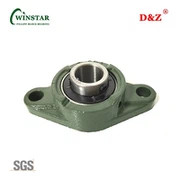
First off, let's start with basics: what even are the bearings? Quick non-nerd version-they're not your classic cast iron or steel pillow blocks (you know, the heavy ones that rust if you so much as look at them wrong). These are made from high-performance thermoplastics, usually stuff like glass-filled nylon, PTFE-reinforced polyethylene, or PVDF. The housing's plastic too, not metal, so that's two big parts that could react with solvents if picked wrong.
solvent resistance
Now, the solvent resistance part is where it gets tricky because "solvent" is a super broad term. Solvents aren't just one thing-you've got mild ones like isopropyl alcohol, strong ones like acetone, industrial-grade stuff like mineral spirits, even harsh chemicals like hydraulic fluid or refrigeration oils. I've seen a shop use the same bearing in a bakery (where they wipe down with mild soap and water) and a auto body shop (wiping with lacquer thinner) - two totally different results.
Here's the key point not everyone talks about: most the bearings that claim "solvent resistant" only work for specific solvents. I've had a customer call me panicking once because our standard the bearings failed in their parts washer that uses a heavy-duty alkaline solvent. Turns out, they didn't check the chemical compatibility chart. The good news? The ones we offer are tested for a wide range of common solvents, but it's not a one-size-fits-all deal.
Solvent suitability

01.
mild solvents
Let's talk about what works, and what doesn't. For mild solvents-think common cleaning agents, water-based solutions, isopropyl alcohol, even most food-safe cleaning stuff that's used in the food and beverage industry-thermoplastic bearings hold up way better than metal. I was at a craft brewery last month, and they were using our thermoplastic take up bearings (/thermoplastic-bearing/thermoplastic-take-up-bearings.html) on their conveyor that carries malt and hops, and they're wiping it down with a vinegar-water solution every shift. 6 months in, no swelling, no seizing, nothing. Metal bearings would've started rusting in a month, no question.
02.
hydrocarbon-based solvents
Where things get dicey is with strong, hydrocarbon-based solvents, like acetone, methyl ethyl ketone (MEK), or lacquer thinner. Those can actually break down some lower-grade thermoplastics-they cause the plastic to swell, soften, or even craze (that fine web of cracks you see on old plastic phone cases). I had another customer in a auto body shop who tried our square flanged thermoplastic bearing housing (/thermoplastic-bearing/square-flanged-thermoplastic-housings-and.html) with a solvent that had MEK in it, and within 2 weeks the housing was all swollen and wobbly. We ended up swapping them for our PVDF-reinforced units, which are way more resistant to strong industrial solvents. That's why it's so important to match the bearing to the exact solvent you're using, not just pick a random "solvent resistant" one.

Will solvents impair the lubricating performance of bearings?
Another thing I get asked: "Will solvents make the lubrication on the bearing go bad?" Good question. Most thermoplastic pillow block bearings are either plain bearings (lubricated for life, no external lube needed) or have a dry lubricant coating like PTFE embedded in the plastic. Solvents won't wash that lubricant away like they would grease on a metal bearing. Wait-there's a catch here: if the solvent is extremely harsh, it can break down the embedded lubricant over time, but that's way slower than grease washing off. We had a customer in a metal stamping plant using our thermoplastic oval flange housing units (/thermoplastic-bearing/oval-flangedthermoplastic-housing-and-units.html) with a heavy oil-based solvent, and after 18 months the lubricant was just starting to wear a little-they swapped to a thicker grade of embedded lubricant, and now it's been 3 years, no issues. That's way better than metal bearings they were using before, which needed lube every week and failed in 2 months.
Let's get specific about the grades we carry. Our standard line of the bearings (/thermoplastic-bearing/thermoplastic-pillow-block-bearings.html) is made from glass-filled nylon, which works great for most mild solvents, food-safe cleaning, water, and even mild hydraulic fluids. But if you're dealing with stronger solvents like acetone, chlorinated solvents, or strong acids, you need the higher-grade PVDF or PEEK-based thermoplastics. Those are the ones that stand up to 90% of industrial solvent applications, no problem. I always tell customers: send me a sample of the solvent you're using, or tell me exactly what it is (brand, type, if you know the chemical makeup), and I can tell you if our bearings will work. That's way better than guessing and wasting money on parts that fail.
Practical Application Examples
Let's also talk about real-world use cases, because that's what matters. I've got a customer in the pharmaceutical industry, where they have to clean every piece of equipment with harsh sterilizing solvents. They switched from metal to our custom plastic bearings (/thermoplastic-bearing/custom-plastic-bearings.html) 2 years ago, and they've cut their bearing failure rate by 90%. The solvents they use are a mix of isopropyl alcohol and quaternary ammonium compounds, and our glass-filled nylon bearings handle that no problem. Another customer in the printing industry, where they use mineral spirits to clean ink rollers-they tried metal bearings, which rusted and seized every 3 months. Switched to our thermoplastic take up bearings, and now they go 18 months without changing bearings. That's the kind of ROI you're looking for, right? Less downtime, less replacement parts, no rust headaches.
limitation
Now, what's the catch? There are always trade-offs. Thermoplastic bearings are usually not as load-bearing as metal, so if you've got a super heavy load (like a 500lb conveyor), you might need a metal bearing. But for most applications under 10,000 lbs, they hold their own. Also, if you're in an area with extremely high heat and strong solvents, some thermoplastics start to soften. But most workshop and industrial areas run under 150°F, which is within the operating range of our standard thermoplastic bearings. If you're dealing with higher heat, we have high-temperature grades that handle 300°F+ and still resist solvents.
conclution
So, to circle back to the original question: Are thermoplastic pillow block bearings resistant to solvents? The short answer is yes, most of the time-but only if you pick the right type for your specific solvent. They're way more solvent-resistant than metal bearings, because they don't corrode, and their lubrication won't wash away easily. But not all thermoplastics are the same-don't grab a cheap no-name bearing thinking it'll work, because it'll likely fail.
If you're in the market for bearings and you're dealing with solvents, I'd love to help you pick the right one for your setup. Whether it's a standard the bearing, a take up bearing for a conveyor, or a custom unit for a specific application, we've tested all our stuff against common solvents, and we can give you a solid recommendation. Don't waste time and money on bearings that will seize, rust, or fall apart because of solvents-reach out, send over details about your application, and we'll make sure you get something that lasts.
FAQ
Q: What is thermoplastic pillow block bearing?
A: It is a mounted bearing unit consisting of a thermoplastic housing and an insert ball bearing. The housing is made of engineering thermoplastic material, paired with a chrome steel bearing insert. It is lightweight, corrosion-resistant and suitable for light-load applications.
Q: What material is the thermoplastic housing made of?
A: Normally glass-filled polypropylene or glass-reinforced nylon. The reinforced thermoplastic provides good rigidity, low weight and resistance to moisture and many mild chemicals.
Q: What are the advantages compared with cast iron pillow block bearings?
A: - Much lighter weight - Good corrosion resistance, rust-free - Low noise during operation - Resistant to weak acids, alkalis and moisture - Electric insulation property - Lower cost for light duty use
sales@winstarbearing.com
+86 16632960682